 EN
EN

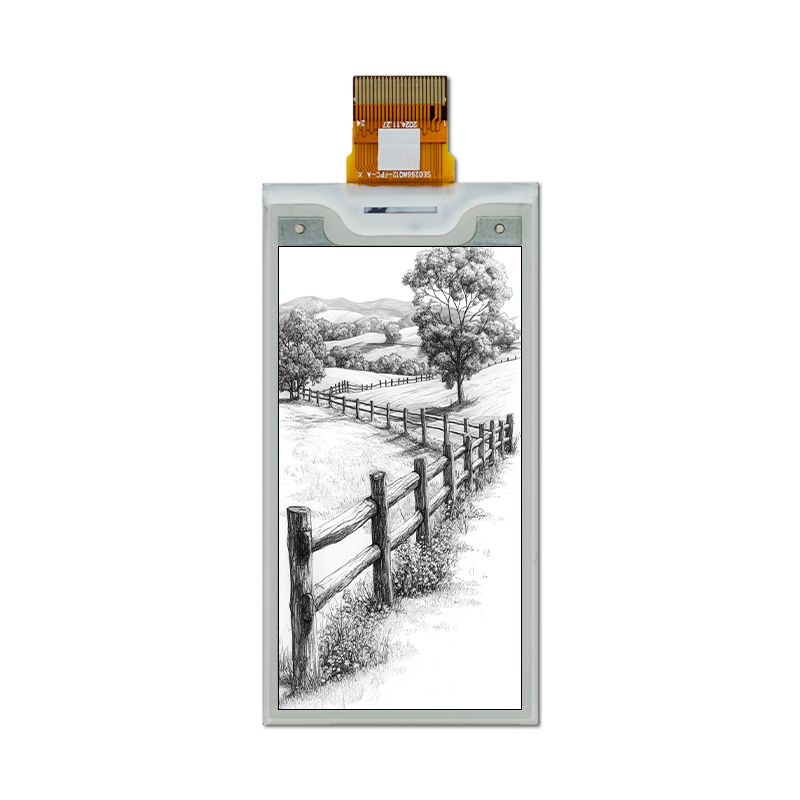
Harnessing Low Power E-paper Displays for Modern Electronics
As the Internet of Things (IoT) expands, the challenge of maintaining battery-powered devices has become a significant technical hurdle for engineers. Whether it is an industrial sensor monitoring environmental conditions in a remote facility or a smart home device designed to last years without a battery change, energy efficiency is the key to feasibility. Electronic paper, or e-paper display technology, has emerged as the premier solution for these low-power applications. By combining high readability with near-zero energy consumption for static content, e-paper is fundamentally changing how we approach display-integrated hardware design.
The Science of E-paper Efficiency
The primary advantage of e-paper is its bistability. Unlike LCDs, which require constant energy to keep liquid crystals aligned to display an image, an e-paper display only requires electricity when the content on the screen is updated. Once an image is rendered, it remains indefinitely without a power source. This technology uses microcapsules filled with charged pigment particles, which migrate when a field is applied. This unique physical mechanism makes e-paper perfect for applications where information needs to be visible for long durations, such as e-tags, price indicators, or environmental monitors, effectively removing the display from the primary energy budget of the device.
Strategies for Maximizing Battery Longevity
Designing for extreme battery life requires more than just picking an e-paper screen; it requires a holistic approach to system architecture. Engineers must optimize the entire signal chain, from the low-power microcontroller (MCU) that manages the display to the sleep-mode currents of all peripheral sensors. Implementing e-paper displays also requires careful management of waveform updates. Updating the screen too frequently can drain the battery unnecessarily. By optimizing content refresh intervals and utilizing ultra-low power deep sleep modes, hardware designers can achieve the target of years of operation from a small coin cell battery, a feat impossible with traditional backlit displays.
Diverse Applications in the IoT Landscape
The versatility of e-paper in low-power environments is vast. In the retail sector, Electronic Shelf Labels (ESLs) allow for instant pricing updates across thousands of units without the need for manual staff intervention or excessive power infrastructure. In the medical field, e-paper is used for patient identification monitors that maintain visibility even during a complete power failure, enhancing clinical safety. In logistics, smart container tags track data like temperature or humidity throughout a supply chain, displaying the current status clearly without depleting the tag's battery. These use cases highlight how e-paper moves beyond mere convenience to become a functional necessity for professional efficiency.
Overcoming Integration and Design Challenges
While the benefits are clear, integrating e-paper does come with technical nuances. Factors such as response time (e-paper is slower than LCD) and ambient lighting conditions need to be considered during the prototype phase. Unlike backlit screens, e-paper requires sufficient environmental light to be read easily. Additionally, the driver circuitry must be precisely calibrated to provide the correct voltage pulses to move the pigment particles effectively. Partnering with a display manufacturer that provides proven driver boards and deep technical documentation helps designers overcome these hurdles, ensuring that the transition to low-power technology is both smooth and reliable.
Topwin: Leading the Way in E-paper Technology
For engineers aiming to implement efficient, reliable, and high-quality e-paper displays, the choice of manufacturer is paramount. Topwin provides advanced e-paper solutions specifically engineered for low-power and long-duration applications. With a deep focus on technical support, robust driver hardware, and component stability, the company helps bridge the gap between initial design concepts and sustainable, energy-efficient production. Whether developing complex IoT infrastructure or specialized industrial monitors, Topwin offers the technical expertise and consistent component supply needed to succeed. Through its commitment to innovation in display science, the brand remains a vital partner for companies looking to lead the future of low-power electronics.