 EN
The Power Management Challenge in Modern Gadgets
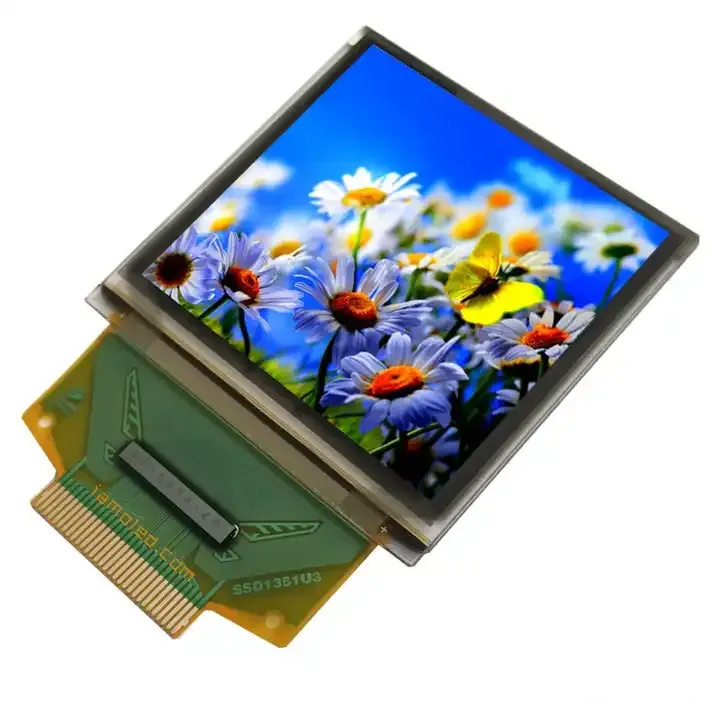
Device engineering always comes down to a tight balance between performance and battery life. No matter how bright or crisp a display looks, if it drains the battery in a few hours, end users are going to look elsewhere. In today's crowded electronics market, portable gear, handheld medical tools, and smart industrial terminals need to run longer on a single charge than ever before. When engineering teams set out to solve this power riddle, the display window is always the biggest energy consumer on the hardware bill of materials. Taking a deep dive into the power draw of an oled screen reveals why it has become the gold standard for power-conscious developers who want to squeeze every last drop of efficiency out of their system architecture. Stripping away unnecessary power drains lets designers build hardware that stays active longer in the field, giving users total confidence whether they are out in the sun or running critical diagnostics away from a wall outlet.
Unpacking Self-Emissive Physics and Backlight Elimination
To understand why organic displays handle power so differently, you have to look at how they generate light. Traditional liquid crystal display panels rely on a massive backlight unit that stays powered on across the entire glass surface, whether the user is looking at a pitch-black night sky or a bright white document. That constant, blanket energy draw places a hard limit on power savings. Organic light-emitting diode technology flips this script entirely through a self-emissive architecture. Every single sub-pixel creates its own illumination independently without needing an extra light source sitting behind it. When a pixel needs to show black, it simply shuts off completely, drawing zero current. This pixel-level control means an oled screen only consumes energy for the exact pixels that are actively lit, transforming how power budgets are calculated across portable hardware designs and eliminating the wasted energy typical of older legacy setups.
Content-Driven Energy Dynamics and UI Optimization
One of the most fascinating aspects of organic display technology is that its power consumption is completely dynamic, changing in real time based on the visual content shown on the glass. Unlike fixed-backlight displays that burn the same amount of power regardless of what is on screen, showing heavy amounts of dark colors or implementing a clean dark mode user interface drastically cuts down current draw. Industry studies on human-machine interfaces and display physics show that shifting from a bright white background to dark themes can slash display energy use by a massive margin. However, engineers also have to factor in sub-pixel efficiency, as blue and green emitters behave differently under load compared to red. By pairing smart software interface design with a well-tuned driver setup, product developers can achieve remarkable battery runtime extensions without sacrificing visual clarity, color punch, or user engagement across different lighting environments.
Thermal Management and System-Level Reliability
Energy efficiency goes hand in hand with thermal control. When electronic components draw less electrical current, they generate less internal heat, which is a massive win for compact device enclosures. In handheld field units and tightly sealed medical instruments, trapped heat can lead to thermal throttling, component drift, and accelerated battery degradation over time. Field reliability reports indicate that lowering the continuous thermal load inside a sealed chassis protects sensitive nearby microcontrollers and power management ICs. Because an oled screen only heats up proportional to its active pixel output and overall brightness level, it helps maintain a cooler internal environment, directly boosting the long-term reliability and operational stability of the entire device even when deployed in harsh industrial environments or under heavy daily usage cycles.
Field Lessons in Power-Optimized Integration
Putting together a power-efficient hardware system always involves tricky real-world trade-offs, especially when trying to balance peak outdoor brightness against battery preservation. Over years of hands-on experience helping clients build custom display modules for industrial handhelds and portable diagnostic gear, fine-tuning the power profile requires a tight collaboration between software programmers and hardware layout engineers. For example, during the redesign of a remote industrial data logger, switching to an optimized OLED module allowed the unit to run through multiple shifts on a single battery charge without needing a recharge—an upgrade that field technicians praised instantly. These practical projects prove that understanding the nuances of display energy draw yields massive operational payoffs in the field, meeting the tough expectations of users across diverse global markets who demand reliability above all else.
Manufacturing Excellence and Supply Chain Support with Topwin
Turning an energy-efficient display concept into a reliable commercial product requires a manufacturing partner with deep technical know-how and a dependable supply chain. Topwin focuses on delivering high-performance display solutions tailored to the exacting specifications of global product developers. Backed by advanced production lines, rigorous quality assurance protocols, and comprehensive customization capabilities, Topwin helps bridge the gap between ambitious power-saving designs and scalable volume manufacturing. Whether your project demands specialized driver IC tuning, unique power profiles, or rugged packaging for demanding environments, Topwin provides full-spectrum support from prototype to final delivery. Connect with Topwin today to explore how our manufacturing expertise can elevate your next-generation energy-efficient devices.
Table of Contents
- The Power Management Challenge in Modern Gadgets
- Unpacking Self-Emissive Physics and Backlight Elimination
- Content-Driven Energy Dynamics and UI Optimization
- Thermal Management and System-Level Reliability
- Field Lessons in Power-Optimized Integration
- Manufacturing Excellence and Supply Chain Support with Topwin