 EN
EN

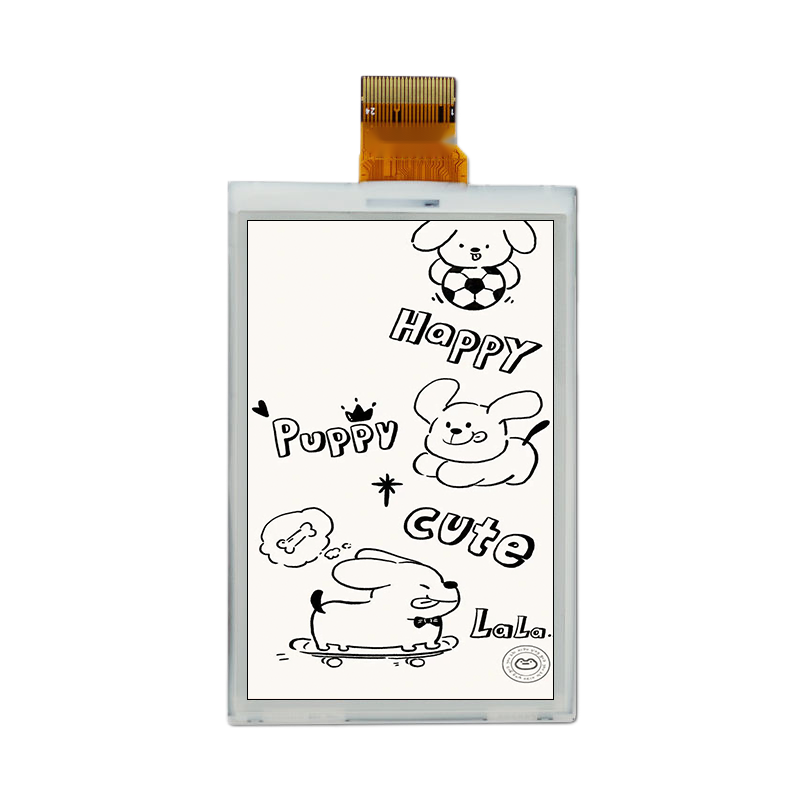
How Bistable Technology Enables Ultra-Low Power Operation in E Ink Displays
Zero-power image retention: The physics of electrophoretic bistability
The secret behind why E Ink displays can keep showing images forever without needing any power lies in something called electrophoretic bistability. Inside each tiny pixel there are little capsules packed full of charged black and white particles floating around in liquid. Apply some electricity and those particles start moving through a process known as electrophoresis until they arrange themselves into whatever text or pictures we want to see on screen. What makes this so special? Once the electricity stops, these particles stay put thanks to van der Waals forces holding them in position. No continuous power needed at all to keep the image displayed. This gives E Ink screens their distinctive paper-like quality where images just sit there without fading away. Contrast this with regular displays that constantly need refreshing and bright backlights running all the time to show anything.
Energy benchmarking: <0.1% duty cycle vs. LCD/LED quantifying the E Ink display advantage
The reason why E Ink displays are so power efficient has everything to do with how they work. These screens basically need electricity only when changing from one image to another. Most of the time, they just sit there showing whatever needs to be shown without any additional power draw. Compare this to regular LCD or LED displays which constantly need refreshing, typically around 60 times per second, plus all that backlighting whether anything actually changes on screen or not. Tests have shown that in situations where information stays pretty much the same for long periods, E Ink can cut down on display power usage by almost all of it. That's why things like those digital price tags in stores or weather sensors out in the field can run for months or sometimes years on tiny batteries. Try doing that with an old fashioned LCD display though, and chances are good the battery would be dead within a week or two at most.
Extending IoT Device Battery Life to Months with E Ink Displays
Coin-cell longevity: Real-world validation of 3+ months on a single battery
Real world tests show that IoT devices with E Ink technology can last well over three months running on just a single CR2032 coin cell battery, even when taking sensor readings every hour and sending out wireless updates. Take temperature monitoring systems as an example. These devices keep going strong for around 100 days straight, updating their screens and pushing data through Bluetooth Low Energy connections. The reason they last so long isn't because they have bigger batteries, but rather because they don't waste power waiting around. The display screen only uses electricity when it actually needs to change what it shows. For businesses using these sensors in stores or factories, this means replacing batteries 90 percent less often throughout the year. Less frequent battery swaps mean lower maintenance costs and significantly reduced electronic waste accumulation over time.
Wireless coexistence: Optimizing BLE/Wi-Fi firmware to preserve E Ink energy savings
To fully realize E Inks ultra-low power potential, wireless subsystems must align with its event-driven operation. Firmware best practices include:
- Synchronizing BLE advertising bursts with scheduled display refreshes (not continuous polling),
- Using differential update protocols that transmit only changed screen regions,
- Deferring Wi-Fi connections to pre-defined maintenance windows rather than on-demand triggers.
These strategies reduce wireless subsystem energy use by up to 40%, ensuring the display remains the least power-hungry component not the bottleneck in the overall system architecture.
E Ink Displays vs. LCDs in Static and Outdoor IoT Applications
For static and outdoor IoT deployments, E Ink outperforms LCDs across two critical dimensions: energy efficiency and environmental resilience.
Liquid crystal displays need constant backlighting and keep refreshing frames even if nothing on screen actually changes. This makes them pretty much impossible to use with batteries that last very long. E Ink technology works differently because it's bistable, so it doesn't need those same power hungry components. The energy savings are massive too - we're talking about reductions of more than 99% in what the display consumes. Real world tests back this up. Take electronic price tags in stores for example. These little devices sit there for years running off tiny coin cell batteries while still showing prices clearly.
The difference becomes even clearer when looking at outdoor performance. E Ink displays work their magic through ambient light reflection, which means they stay sharp and readable even under bright sun without any annoying glare. LCD screens tell a different story though they tend to fade out in sunlight and need constant brightness adjustments that chew through batteries faster than most people would like. What makes E Ink really stand out is its lack of blue light emission combined with that familiar paper feel on the eyes. This matters a lot for things like dashboard displays in commercial buildings or those weather stations mounted outside stores where people check temperatures all day long without getting headaches from staring at screens too long.
Proven IoT Use Cases Leveraging the E Ink Display Advantage
Electronic Shelf Labels: 99% Reduction in Display-Related Energy Consumption
Take a look at electronic shelf labels (ESLs) and you'll see how E Ink technology makes a real difference when scaled up across stores. These devices only draw power when updating prices or promotions, unlike traditional LCD screens that constantly consume electricity just to stay on. That means ESLs cut down display energy usage by around 99% compared to their competitors. Retailers can now install massive numbers of these battery operated tags that last years without needing replacement, saving them money on expensive wiring systems or charging stations. Pairing them with energy efficient wireless tech such as BLE or LoRaWAN creates an entire system where prices update instantly across all shelves while keeping energy consumption extremely low. Many stores have already made the switch and are seeing both environmental benefits and significant cost savings over time.
Environmental Sensors and Smart Building Dashboards: Always-On Readability Without Recharge
Air quality monitors, smart thermostats, and facility dashboards all benefit from E Ink displays. These screens stay visible even under direct sunlight and can last more than three months on just one charge. That's pretty impressive when considering they report data every hour via BLE. Traditional LCDs drain batteries fast because they need constant backlighting and refreshing. E Ink works differently since it doesn't consume power when displaying static information. This matches up well with how sensors typically send out data in short bursts rather than continuously. We've seen this in action at various factories and office buildings where these displays remain readable day after day without issues. Most technicians now prefer E Ink for important IoT installations where regular maintenance checks are impractical or disruptive.
FAQ
What is electrophoretic bistability?
Electrophoretic bistability is a phenomenon in E Ink displays where charged particles remain in their set position once electricity is applied and removed, due to van der Waals forces. This allows images to stay displayed without power.
How do E Ink displays save energy compared to LCDs?
E Ink displays require power only when the image is changing, whereas LCDs continuously need power for refreshing and backlighting. E Ink can thus reduce display power usage by over 99% when the content is stable.
How long can IoT devices with E Ink displays run on a single battery?
IoT devices with E Ink displays can run for more than three months on a single CR2032 coin cell battery, due to the display's low power needs.
What are some real-world applications of E Ink displays?
Real-world applications include electronic shelf labels, air quality monitors, smart thermostats, and dashboards in smart buildings, offering significant energy savings and enhanced visibility.